
Flowering plants at Cabo de la Huerta
The Alicante region features an agreeable Mediterranean climate, (dry, pretty warm summers and mild winters) with an associated flora.
Despite the strong urbanization at the top, the slopes and rugged shoreline of Cabo de la Huerta has retained much of its original
vegetation.
After a dry period the area looks barren and dried out, but after one rain shower everything greens and soon you see flowering
plants, like Shrubby Globularia, Blue Pimpernel, Mediterranean Beach Daisy, Hottentot vig, Slender-leaved Iceplant and many others.
The
bottom of the shallow tidal pools seems covered with white shells, but on closer inspection this turns out to be Peacocks tail seaweed.
The
photos date from April 2024 through December 2025.


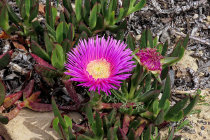


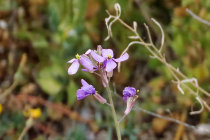
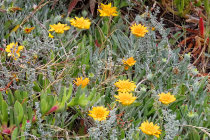

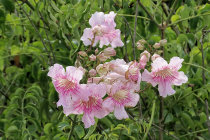

the Pink Trumpet Vine is also an invasive species from southern Africa. It looks nice though
the hardy Iberian Knapweed
the Mediterranean Beach Daisy is also known as Gold Coin
the Treasure Flower originates from southern Africa
you can eat the leaves of the Garland Chrysanthemum
the Common Laterna is a splendid looking plant, but is an invasive species and poisenous
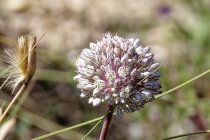
the Broadleaf wild Leek is eatable and tastes a bit like garlic
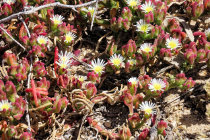
the Slender Iceplant
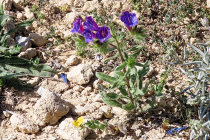
Paterson's curse is poisenous to livestock, especially horses. Luckily you do not see many horses at the Cabo
a Flowering Caper Bush. You can eat the tasty flower buds


Shrubby Globularia can be used as a laxative, meaning it helps against constipation
the Blue Pimpernel is a small plant with nice, fresh flowers
the Sea Fig originates from Southern Africa but is doing just fine here in the Alicante region
the Purple Mistress is an elegant plant that attracts many butterflies
Peacocks tail (Padina pavonica) is a seaweed that grows in the waters of the shallow pools
this Italian Gladiolus looks tiny, but the plant can grow to a height of 1 meter