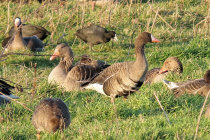
White-fronted Geese mingle with Greylegs and the occasional Coot
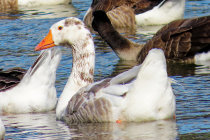
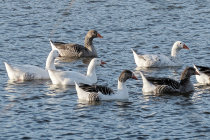
and this is a full family of hybrids, Emden and Greyleg
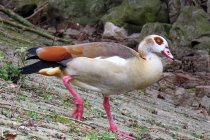
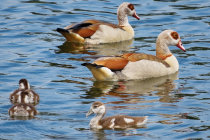
Egyptian Geese are good at raising and defending offspring
Egyptian Geese are an invasive exotic species. They like beautiful though
Pa and Ma bring their offspring to safety through a field of water lilies
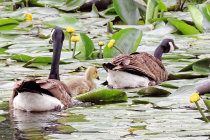
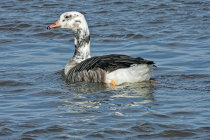
another hybrid from a Canada Goose and an Emden Goose
Birds of the uiterwaarden: Geese and Swans
With sheltered, nutrient-rich ponds located on either side of the River Maas, the nature reserves Hedelse Bovenwaard and Empelse Waard
offer a healthy biotope for large waterfowl like geese and swans.
Of the geese breeding here, the Greylag Goose is the most
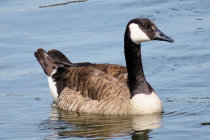
common, but the Canada Goose is on a steady rise since the 1980's.
The Egyptian Goose population is also growing rapidly,
despite the fact that this invasive exotic species must be actively combated according to European regulations.
Geese are absolutely
not xenophobic and the species interbreed easily and often.
In the migration period, Emden Geese, White-fronted Geese, and Barnacle
Geese stop here to forage and rest.
Mute Swans live here all year round, and many others join them during the annual bird migration,
along with the occasional Black Swan and Whooper Swan.
The photos shown are from 2021 onwards.




a wary Greyleg Goose paddles away
Canada Geese originally hail from North America but are now very common in the Netherlands
Hybrid Geese are common, this one is a mix of Greyleg and Emden Goose
a migrating Emden Goose


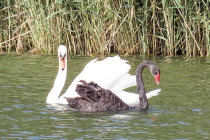
Black Swans are rare here, they seek company with Mute Swans
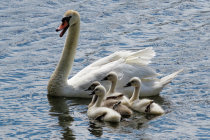
Young Mute Swans stay a year with their parents, it takes another year to turn shiny white
Mute Swans are very aggressive when they have young
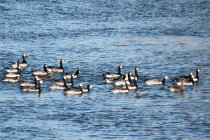
a flock of Barnacle Geese with two White-fronted intruders
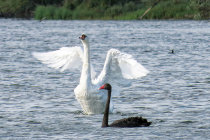

this Black Swan has a mighty protector
migrating Whooper Swans