Early bumblebees start early in the season
Gypsy's cuckoo bumblebees invade and take over the nest of real bumblebees
a Red Cuckoo bumblebee on a Purple loosestrife
Brown-banded carder bees come in different colors
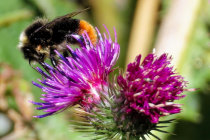
a Tree bumblebee sucks on a Welted thistle
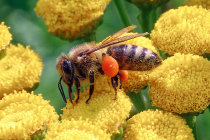
pollen has accumulated in the legs of this Honey bee
a picture-perfect Honey bee probing a Tansy
a White-tailed bumblebee hangs on a Globe thistle
Insects of the uiterwaarden: Bumblebees and Bees
The nature reserves in the floodplains of Empel and Hedel are never mowed and therefore sport flowery meadows and bushes in spring
and summertime.
On a warm summerday the area is buzzing with insects like bees and bumblebees that are sucking nectar from flowering
plants and in the process take care of the essential plant pollination.
In the Netherlands there are about 30 different
species of bumblebee, and the number for bees even runs in the hundreds.
Thanks to their massive and hairy body, bumblebees
can tolerate pretty low temperatures and some even live high up in the frigid arctic tundra.
Most Honey bees you see here are not wild,
but are kept by a Beekeeper.
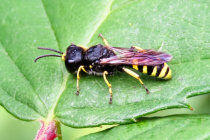
Some Drone flies and Hover flies have adapted to look like a bee or bumblebee, but they only
have two wings..
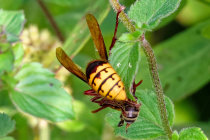
Birds are present to feed on all that delicious protein. But you may also see European hornets grabbing the occasional
bee.
The photos are from 2021 onwards.

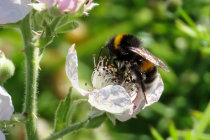



a Buff-tailed bumblebee on a Marsh valerian
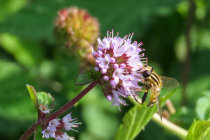
a Common Carder bumblebee tastes from a Water Mint
a Red-tailed bumblebee empties a Welted thistle
a Short-haired bumblebee drops from a panicled aster
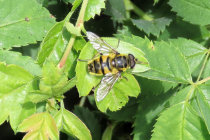
this huge hover fly mimics a bumblebee, but the sucker has only two instead of four wings

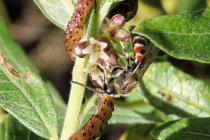
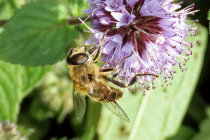
Common furrow bees are mostly solitary
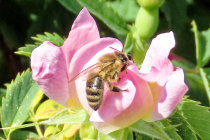
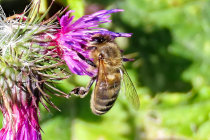
a plain looking Honey bee on a pink Thistle
this looks like a bee but actually is a Drone fly