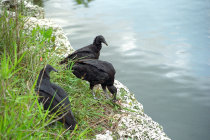
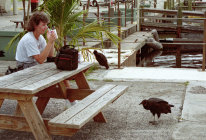
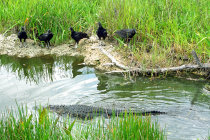
and passes by a wary flock of Black Vultures
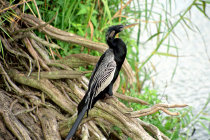
the Anhinga is also known as Snake bird
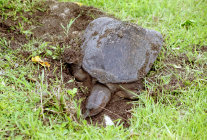
a Florida soft shell turtle is digging in
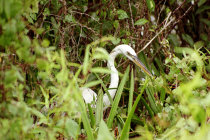
a Great Egret on the hunt
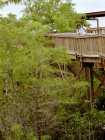
elevated trails let you enjoy flora and fauna without getting wet feet
a Black Vulture in its prime
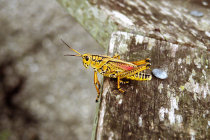
the Eastern Lubber Grasshopper is also known as the Florida Lubber
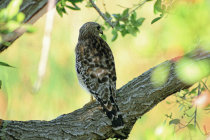
a Red-shouldered Hawk on the lookout
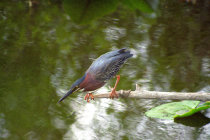
this red-blue bird is a little Green heron
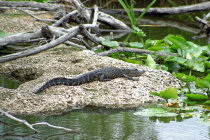
a crocodile on the rocks
the Everglades National Park
The waters of
Lake Okeechobee slowly flow south to Florida Bay over a 150 km wide front, creating one of the worlds
most interesting ecologies.
This "River of Grass" feeds the sawgrass marshes, swamps, mangroves and other eco systems that together are
called the
Everglades. A large part of the area is protected in the
Everglades National Park.
Here wildlife is thriving
with 40 species of mammals, including the very rare
Florida Panther and the more prolific raccoon.
Alligators, crocodiles, turtles and
snakes invest the swamps. One very successful invasive species is the
Burmese Python.
Manatees frequent the southern
parts near the sea where the water is not too shallow.
But above all the Everglades are known
for the hundreds of bird species that thrive here. Ibis, heron, spoonbill and stork wade between the other waterfowl in
the marshes while hawks and Golden Eagles soar high in the blue skies.
Black vultures are never in a hurry, they know time is on their
side...
We visited the Everglades several times, from 1992 through 2001.


a White-tailed deer is heading for the bushes
a typical landscape in the Everglades
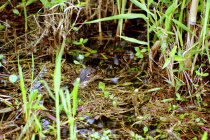
a juvenile alligator, they sometimes become prey themselves
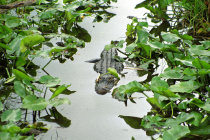
an alligator approaches
an American Brown Pelican
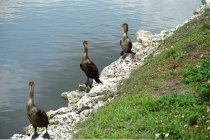
a lineup of double crested cormorants